
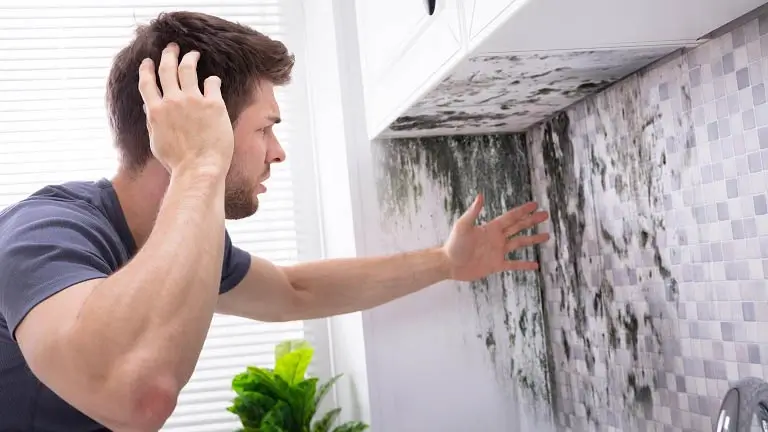
Does Renters Insurance Cover Mold (Answer + 5-Step Evidence Kit)
Yes! But only in certain sudden cases. Covered cases include burst pipes and fire. It does not cover mold caused by neglect, humidity, or long-term leaks.
The answer isn’t a straight yes or no. Coverage depends on:
- Type of policy
- Coverage limit
- Cause of mold
So, this guide breaks down real scenarios, denial triggers, and how to win your claim.
Chances of Coverage Based on Scenarios
Mold often lies in the grey area of insurance policies. Thus, each scenario trigger claims differently:
| Scenario | Coverage Likelihood | Action Step |
| Pipe burst behind wall | 95% (Covered) | Take photos of the pipe before repair. |
| Bath mat left damp | 0% (Denied) | Clean with bleach; don’t file (prevents rate hike) |
| Hidden AC leak | 60% (Grey Area) | Need a professional HVAC report to prove “sudden. |
The “Mold Discovery” Protocol: 5 Steps to Protecting Your Claim
Finding mold is stressful, but the first 24 hours determine whether your claim gets paid or denied. Follow this protocol:
1. Stop the Source, Not the Mold: Before cleaning, identify the water source. If it’s a pipe, turn off the water. If you clean the mold before the adjuster sees the cause, they may deny the claim for “lack of evidence.”
2. The “Digital Paper Trail”: Take high-resolution photos and videos. Capture the mold, the water source, and any damaged personal items.
Crucial: Record a video of yourself walking through the unit to prove the “musty smell” or extent of the damage.
3. The “Non-Disposal” Rule: Never throw away moldy items before the adjuster arrives. If you toss a $2,000 moldy sofa, the insurance company has no “proof of loss” and will likely pay you $0 for it.
4. Professional Inspection: While you pay for the inspection out of pocket, a certified mold industrial hygienist’s report is nearly impossible for an insurance company to argue with. It turns “your word” into fact.
5. Request Your Claim Number Immediately: Once you file, get your claim number and the direct extension of your adjuster. Avoid the 1-800 general queues. You need a single point of contact to avoid conflicting advice.
When Renters Insurance Does Not Cover Mold Damage
Mold damage is preventable. There are just a few occurrences when it becomes accidental and unintentional. Typically, mold builds up due to negligence and grows gradually, not “suddenly and accidentally.” Insurance providers don’t cover these scenarios at all:
Tenant Negligence:
Mold due to ignorance is never entertained by insurers. It is considered more of a maintenance problem, which could be addressed in the initial steps.
Picture This: After a rushed morning, you left the bath mat wet and the shower curtain bunched up. Weeks later, a musty smell led you to green mold climbing the curtain and wall.
Will the insurer pay for this mess? Not a chance! You are on your own here.
Landlord Negligence:
Personal property damages due to landlord negligence including:
- Unaddressed Structural Issues
- Long-Ignored Leaky Roof
- Faulty Plumbing
is not covered by insurance providers. You must pursue compensation directly from your landlord. Further if it damages your furniture, electronics and valuables you can file a lawsuit.
Gradual Damages:
Slow visible growth of mold isn’t generally a covered peril. However, if it’s the result of hidden leaks, that increases the chances of coverage. Common Denials: Why renters insurance usually doesn’t pay for bed bugs.
Excluded Perils:
Insurance policies offer two types of coverage: named peril and open peril coverage (all accident coverage, excluding named ones). For named perils, insurers only cover specific events. If mold is not a direct result of covered perils, your insurer will deny the claim. Most commonly:
- Flooding
- Sewer Backup/Drain Overflow
- Earthquakes
- Pest Infestation
They aren’t covered by tenant coverage policies.
Pre-Existing Mold:
Pre-existing mold in a rental apartment is completely the landlord’s responsibility. It is suggested that you thoroughly inspect the place for any mold before moving in. Keep in mind that holding a landlord liable for pre-existing mold can strain your relationship if they refuse to pay. Further, the process of getting mold remediation from landlords can get quite bumpy.
Structural Damage Caused by Mold:
Your tenant insurance policies only cover your content. Dwelling damage due to mold won’t be covered by the insurer. It can possibly kick in if your property owner decides to sue you for damage caused to the property.
Mold Inspection and Testing Cost:
Mold inspection and testing costs also aren’t covered by tenant policies. Although it won’t cost a fortune, it is still the landlord’s responsibility. Potentially, there is an out-of-pocket expense for the tenant if the landlord is unresponsive.
When Renters Insurance May Cover Mold Damage (Exceptions)
Mold damage to your content may be covered if it’s directly a result of a covered peril. For instance:
- Fire
- Burst pipes
- Storm damage
- Falling objects
- Accidental appliance leaks
All you need to understand is the difference between sudden/accidental damages causing mold and slow/gradual damages breeding mold.
The “Sudden & Accidental” Rule: Does Your Claim Qualify?
A pipe leak hidden from plain sight, resulting in mold buildup, will likely be covered as it’s accidental. However, if the pipe leaks and it’s visibly keeping the wall and curtains damp for a longer period of time, it’s negligence. See our guide on when renters insurance covers carpet damage vs. when the landlord is responsible.
Insurance providers thoroughly inspect the situation before reimbursing you. So it’s better to file a claim only for sudden damages.
For instance, sudden and accidental discharge or overflow of water or steam from plumbing, heating, air conditioning systems, or appliances like burst pipe, washing machine hose burst, sudden AC unit leak, or water heater cracking/tearing/burning).
In addition to that, accidental electrical current (damaging a covered appliance that then causes a sudden water leak/mold) is also covered. Read more about protecting your gadgets from power surges and accidental damage.
Mold Directly Resulting from Covered Perils
Named peril coverage commonly includes:
- Fire and Lightning
- Windstorm and Hail
- Explosions
- Riots or Civil Commotion
- Damage by Aircraft or Vehicles (excluding your own car)
- Smoke Damage (from sudden, accidental fire)
- Theft and Vandalism
- Falling Objects for example a tree falling on the roof, causing a sudden leak
- Weight of Ice, Snow, or Sleet
- Volcanic Eruption
Case Scenario:
Your home catches fire. The reason can be a neighbor’s house on fire, an accidental candle drop, or any other. As a result, you call firefighters, and rainwater is on your house, causing dampness to all your belongings. The mold buildup due to this will be covered, as tenant insurance policies cover fire (direct peril).
Your Duty to Mitigate: Why “Waiting” Kills Your Claim
After a leak or burst pipe, you have a legal “duty to mitigate.” If you let the water sit for three days and mold grows, the insurer can deny the mold portion of the claim because you didn’t act fast enough.
- The 24-Hour Window: Mold spores can colonize in as little as 24–48 hours.
- Professional Remediation: Don’t just use a towel. Call a professional remediation team to dry the area with industrial dehumidifiers.
- Insurer Math: Insurers would rather pay $800 for a “dry-out” today than $8,000 for “mold removal” next month. Being proactive makes your claim much easier to approve.
- Broker’s Warning: If an adjuster sees that you waited a week to report a leak, they may categorize the resulting mold as preventable. Leaving you to pay the entire bill out of pocket.
Important Limitations (Even When Covered)
Tenant insurance policies are designed for content coverage, personal liability, and ALE. It won’t cover building structures. The dwelling coverage is more of a landlord’s responsibility.
Personal Property Only:
If mold damages your luxury bag, the insurance company will bear the cost of replacement. But, infested walls or ceiling of your rental apartment won’t be covered by tenant policy.
Specific Mold Sub-limits/Caps:
Insurance policies sometimes have a sub-limit for specific mold coverage, $1,000 to $10,000. The remaining amount will be solely your headache. The same goes for homeowner insurance.
Black Mold vs. Other Mold:
The type of mold, such as green fungus or dusty black mold, won’t affect the coverage limit. Though, it can be used to identify how old the mold is, such as size, growth, and color. Keep in mind that coverage only depends on the initial case of mold and the timeline of events.
Expanding Your Coverage with Mold Endorsements and Specialized Policies
According to This Old House data, professional mold treatment services cost $3,500 for most homes. However, the size of the infected area matters a lot. The cost per square foot is between $10 and $30. That means small condo remediation costs less than a big house.
Spoiler Alert: Extensive whole-house remediation can go up to $30,000.
With a normal insurance policy, you get a huge bill to pay alone. It is better to look for mold endorsements for your house. Especially if you live in a high-humidity area. Additionally, when looking for insurance riders, consider:
Mold/Fungi Removal Endorsements:
Some insurers provide specific mold removal rider policies with much larger limits than usual insurance policies. Typically ranging from $10,000 to $25,000 and $50,000. But bear in mind that the coverage comes with a price tag. The higher the coverage, the higher the premium.
Quick Note: Fungus removal rider only covers remediation, possibly limited personal property damage coverage.
Separate Flood Insurance:
Flood isn’t a covered event (except internal flooding in some situations). Whether you have a renter’s insurance policy, landlord insurance, or any other property insurance. The possibility of having flood cover is near zero. As described, the possibility of mold treatment caused by a flood is also zero.
Sewer Backup Endorsements:
Sewer backup can also cause mold, damaging your personal property. Standard insurance policies won’t cover it. So, buy sewer backup endorsements.
Additional Living Expenses (ALE) for Mold
Mold can cause breathing problems and extreme allergic reactions. If your primary residence becomes inhabitable. You can expect additional living expenses from your insurance company for mold.
Learn more about how renters insurance covers hotel stays and displacement costs here.
ALE Claim Process:
To get ALE, you need a professional mold remediation company’s report confirming uninhabitability.
- Document everything
- Take pictures of infested areas
- Attach the remediation company’s reports to claim extra living expenses.
Beaware: Before you book a luxury hotel and order a gourmet meal, note that there is a basic limit for these coverages, and you will be reimbursed for that only.
Landlord’s Responsibility vs. Tenant’s Role in Mold Management
Mold liability isn’t a “one size fits all” situation. In the eyes of the law and insurance adjusters, the person responsible for the source of the moisture is usually responsible for the remediation.
| Reason | Landlord’s Job (Dwelling) | Your Job (Belongings/Care) |
| The Source | Structural leaks, roof issues, faulty plumbing. | Wet towels, steam buildup, unreported drips. |
| The Fix | Professional mold removal & wall repair. | Protecting furniture & cleaning surface mold. |
| Pre-existing | Must provide a “Habitable” environment. | Must inspect and report issues on Day 1. |
| Legal Risk | Liability for tenant health issues. | Liability for structural damage due to silence. |
The “Paper Trail”: Protecting Yourself from Negligence Claims
If your landlord tries to blame you for mold damage, your documentation is your only defense. To avoid being sued for structural damage, follow the “Written Rule.”
- Report in Writing Only: Never rely on a phone call. Use dated emails, certified mail, or timestamped text messages.
- The 48-Hour Evidence Window: Take photos of leaks immediately. If a landlord ignores a report for more than 48 hours, the liability for any resulting mold shifts heavily toward them.
- The “Follow-Up” Log: If the landlord doesn’t act, keep a log of every follow-up attempt. This “unresponsiveness” record is what wins insurance disputes.
- Broker’s Secret: In New York, the “Warranty of Habitability” protects you. If your landlord ignores structural mold, you may have the right to withhold rent or break your lease. But you must have the written evidence described above to do it safely.
Final Wrap Up:
Whether your mold claim is approved comes down to one thing: The Cause. If it’s a sudden burst pipe or fire. You are likely covered for property and hotel costs. If it’s a slow leak or high humidity, expect a denial unless you have a specific mold endorsement.
Don’t File a Claim Alone: Insurance adjusters are trained to look for “Negligence” to avoid payouts. Before you call your carrier, let an expert review your policy.
Don’t let a “Grey Area” denial cost you thousands. Call Smart Apple Insurance at (718) 523-5353. We will tell you exactly what your policy covers before you talk to the adjuster. Also we help you find a better policy if your current policy isn’t working in your favor.

Alicia Moreau
Alicia F. Moreau is a content writer at Smart Apple Insurance, specializing in clear, engaging, customer-focused insurance content.