
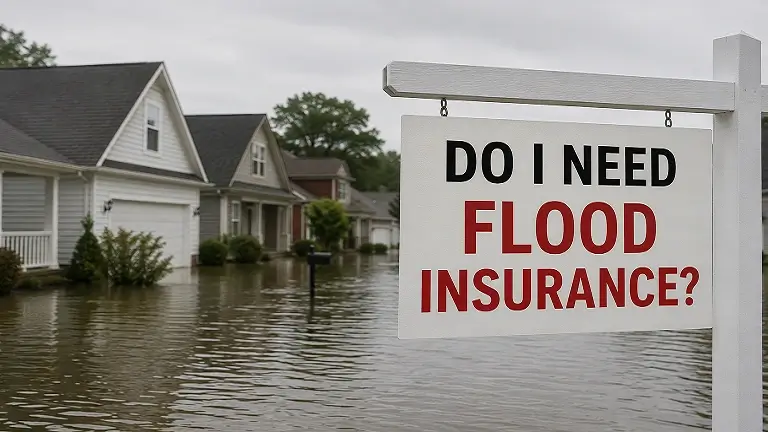
Do I Need Flood Insurance? Costs, Coverage, & Who It’s For (2026 Guide)
Standard homeowners insurance never covers rising water. One inch of flooding can cause $25,000 in damage. Most people assume they are safe because they don’t live near a beach. This is a dangerous mistake. Protecting yourself is about more than rules. It is about financial survival.
How Do I Know If I Need Flood Insurance?
You need it if you are in a high-risk zone. You should buy it if you value your bank account.
Many people think their “Zone X” rating means they are safe. That is a myth. Over 20% of all flood claims now come from these “low-risk” areas. FEMA maps are a great starting point. However, they do not always show modern drainage issues or flash flood risks.
- Lender Mandates: If you have a mortgage in a high-risk zone, you must buy it.
- The Proximity Test: Do you live near a creek or a paved hill? Water flows down.
- Historical Data: Ask neighbors if the street has ever stayed wet after heavy rain.
- Climate Trends: In 2026, we see “100-year storms” happening every few seasons.
If your area has seen new construction lately, the ground cannot absorb water like it used to. This makes every home a potential flood risk.
Is Flood Insurance Expensive?
Prices are now tailored to you.
FEMA recently changed how they price insurance. They call it Risk Rating 2.0. In the past, everyone in the same zone paid the same price. That was not fair. Now, they look at your specific home. They look at your foundation type and how high your first floor sits.
Why Prices Vary:
- The Elevation Gap: A house on stilts pays much less than a house with a basement.
- Rebuild Costs: A luxury home costs more to insure than a simple cottage.
- The 18% Cap: If your rate needs to go up, federal law limits the jump. Most primary homes won’t see more than an 18% increase per year.
- Private Competition: In 2026, the private market is huge. Private insurers often beat government prices by 10% for low-risk homes.
The Four Categories: Who Is It For?
Flood insurance isn’t just for homeowners. Everyone has skin in the game when the water rises.
1. Flood Insurance for Homeowners
This is the “big” policy. It covers your foundation, plumbing, and HVAC systems. It also protects your furniture and appliances. Without this, a flood could wipe out your home equity overnight.
2. Flood Insurance for Renters
Do not wait for your landlord to save you. Their insurance only covers the building “bones.” It will not replace your couch, bed, or computer. Tenant flood insurance is very cheap. It is the best way to protect your lifestyle.
3. Flood Insurance for Condo Owners
Condo insurance is tricky. Your HOA has a “Master Policy,” but it usually stops at your drywall. If a flood ruins your new hardwood floors, the HOA won’t pay. You need a “walls-in” policy to fill that gap.
4. Landlord Flood Insurance
If you rent out a home, a flood is a double loss. You lose the structure and the rental income. A landlord policy protects your investment. Some private plans even pay you while the home is being dried out.
Final Thought: Take the Next Step
The cost of insurance is small compared to the cost of a total loss. In 2026, we have more choices than ever. You can stick with the government plan or find a private deal.
Contact Smart Apple today! Request to run a “flood insurance quote” for your specific address. Knowledge is free, but waiting can be very expensive.
Frequently Asked Questions
Is flood insurance required on vacant land?
No. Insurance companies protect structures, not dirt. You cannot buy a policy for an empty lot. However, the moment you pour a foundation, your risk starts. Most lenders will ask for a policy before the walls even go up.
Is there a waiting period?
Yes. This is the most important rule. Most federal policies have a 30-day waiting period. You cannot buy insurance when a storm is in the forecast. If you wait until the rain starts, it is too late.
What about "Loss of Use"?
Many homeowners think flood insurance pays for a hotel. Some NFIP policies do not include this. If you want money for a place to stay, look at private flood insurance options.